Homestead Dreams
Humane Sustainability & Emerald Homestead
One of the most frequent questions we receive on the homestead is, ‘how can we help?’
In the times of a global pandemic, help looks a little different. We’ve taken the time to think through ways to share this adventure and to welcome your help, and that’s how we’ve arrived here.
There are so many ways to help! We accept support in the form of monthly support on Patreon, one time gifts via Venmo, likes and follows on Facebook and Instagram, and PLANTS!
This registry is always in evolution. We welcome seeds, bulbs, starts, grafts, and larger and favorites are items gathered and shared from your own garden paradises.
If you would like to contribute to helping us feed the community and share the practical steps to create your own homestead, please consider helping with a gift.
Without further ado;
Welcome to our SoKind registry! This website compiles our list of gift requests, but does not sell the gifts. If you would like to 'claim' a gift, be sure to click on the 'Give this gift' button so the gift will be claimed in your name, and so that we won't receive any duplicates. Then, you can follow our instructions on how or where to give the gift.

Please consider long term support of The Homestead Project through our Patreon Page with a monthly contribution. The funds gathered through this site are **specifically restricted** to expenses that help more than the occupants. Funds through the project are used for expenses including; community food production, Community Art, garden maintenance, free little library and free little fruit stands.
Even if you chose not to financially support the project, please follow us to increase our reach!

Don’t wanna fuss with finding the perfect plant? Send some cash and tell us what plants you’d like to see on the homestead.

One of our favorite plant suppliers! Take a peek at the edible plants we are still searching for, maybe you have one to propagate? Help support our goals of feeding the community by sending us edibles!
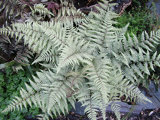
this stunning type of Japanese Painted Fern has a distinctive upright habit and bright white chalky coloration that really makes it stand out wooded borders and shady garden settings. The stipes tend to be a light, bright shade that approaches magenta rather than the typical burgundy stipe of the traditional Japanese Painted Fern. As with other painted ferns they prefer fairly deep shade as their soft fronds are easily burned by hot sun and prefer an evenly moist setting. Many deciduous trees, like Japanese maples, make excellent canopy companions, protecting the ferns with overhead foliage in the summer yet allowing them good light and air circulation during parts of the early spring and late fall when there are no overhead leaves. Like other deciduous ferns they handle cold winters well by staying dormant below the ground and re-emerge in the spring.
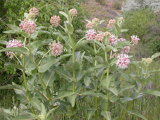
This widespread species is native to the floor of the Willamette Valley and is locally common in the Columbia Gorge. and occupies dry rocky hillsides in full sun but tolerates heavy clay soil. In the best conditions (loam) it is huge spreading perennial that requires pre-planning and some real estate. Gray green stalks and leaves rise up to about 4’tall and bear deliciously fragrant pink orbicular flowers. These are irresistible to butterflies, including Monarchs, and if you want one to visit your garden this plant is good insurance. However, all butterflies find it irresistible. Spreads underground vigorously by stolons and can come up quite a way from the initial clump. Full sun and well drained soil. Completely winter deciduous and emerges relatively late in spring. Be patient. Oregon native plant.
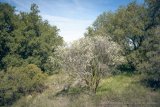
This is a Willamette Valley native form of Buckbrush found in the SW part of the Valley. This species is found historically from the Portland/Oregon City area in the Willamette Valley and throughout the southern half of the state well into California. It has lost large areas of its northernmost natural range to development and fire suppression. It is a fire adapted species that requires disturbance to distribute. Thats a pity because this is a fantastic native shrub for hot dry sites. It is now employed by ODOT for freeway plantings and we are happy to see that. A large, angular evergreen shrub with small deep green paddle shaped leaves. In April the whole shrub is swarmed with pure white flowers.This is a beacon to all pollinators and the sweetly fragrant flowers will literally be buzzing in bloom. Fast growing incredibly tough shrub for areas of intense drought and reflected heat. To 8′ x 8′ very quickly in any soil that does not become boggy. Excellent performance in tough urban situations. Irresistible to bees and butterflies. Associated plants in the wild are Rubus ursinus, Dodecatheon hendersonii. ,Extremely cold hardy to below 0ºF. No summer water. Moderate deer resistance. Oregon native plant.
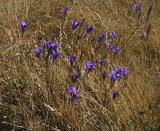
Wonderful native bulb that has several common names. Harvest lily is one as well as cluster lily. This gorgeous inhabitant of dry hillsides from British Columbia to southern California erupts in clusters of blue flowers just as summer drought ensues. To 14″ tall but normally shorter a clump of scrappy green leaves comes out in autumn and persists until bloom time. As the leaves go dormant the bulb sends up its bloom. Easy to grow if you accept its requirements. Bulbs that are potted should be watered after planting but established plants should rely only on what falls from the sky. Best to not irrigate in summer. In time it spreads by both increasing bulblets as well as seed. Excellent planted among Festuca roemeri var. roemeri as well as Festuca californica where it occurs naturally. Excellent pollinator bulb in the lily family. Leaves are deer resistant but flowers are not reliably deer proof. Full hot, all day sun in soils that dry completely in summer. Native throughout the Willamette Valley and into the gorge locally. Oregon native plant.
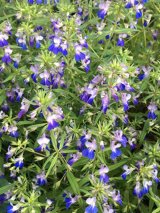
Native annuals often get over looked in our gardens. They occupied vast stretches of the Willamette Valley and civilization has caused those displays to suffer. In our gardens they are precious reminders that we should include every category of native plant. Giant Blue Eyed Mary is one of our most delicate looking and stunning in floral detail, It makes a hazy cloud of beautiful blue and white small snapdragon flowers from late April to Mid June. A true annual that dies once the floral display is done. But leave the skeletons of the plant for several weeks longer to form and shed seeds for next years display. This 20″ tall grassy plant occupies open sunny sites as well as the margins of forests. In our gardens it appreciates open slightly disturbed soil. Seedlings germinate in autumn and over winter as small plants. They will heavily occupy an area about the size of a 9″ pie. Excellent plant to succeed mid and late spring bulbs. Water lightly after planting and to establish then none required. Native to the Portland city limits as well. Fantastic displays of this plant can be seen at Camassia in West Linn all through late spring. This is a very reliable re-seeder if you give it some open ground and check for slugs. Seedlings germinate quickly following the first rains and are incredibly cold hardy and drought tolerant. Don’t worry, they are from here, they know what to do. Attracts a wide variety of native pollinators including a wealth of smaller hover flies. Oregon native plant.
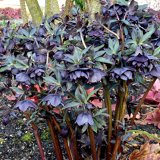
These form a mound of leathery, evergreen foliage bearing upright stems of large, saucer-shaped blooms from late winter through spring. This selection features double, frilly blooms in shades of midnight purple and slate to black. Leaves emerge purple in early spring before maturing to green. This variety is reported to retain its colour and petals after the flowers have set seed, greatly extending the interest beyond the initial bloom. Great in part shade. Site these where they will stay for many years, since the plants resent being disturbed. Trim the old leaves to the ground in late winter before the buds emerge, to allow the flowers maximum impact. Bred by Hellebore hybridizer Marietta O’Byrne of Oregon. CAUTION: Harmful if eaten/Skin irritant.
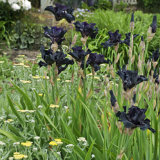
Rich dark near-black petals and an excellent growth habit make this bearded iris a standout in the landscape. Light sweet fragrance. Drought-tolerant and easy to grow.
.3 acres doesn’t sound like much but 35’x105’ of property is buried in over growth. Please help us hire a surveyor to locate the 4th property marker... where it is will determine how much water rights we just acquired...

Holy rewiring! The homestead offices are breaking into a suite. The honey and I will be separated by the library, which means both desks require their own Isobar. And the Tardis ate the current media system bar... at least this homestead is running on new wiring...

We often work late hours, meaning I’m often gardening at night. Help me distinguish the walnuts from the tomatoes in the dark!

New microclimate first the homestead! Please help us figure out our new weather patterns

We make our own condiments and they often get lost in the fridge. Help us be more practical and save space in the fridge by only making one batch at a time. (Word to the wise, never let homemade mayo get lost in the back of the fridge...)
www.kovot.com/shop/holidays/memorial-day/ceramic-bbq-condiment-set-and-tray/

These are an extremely limited run. If you can get your hands on one, you are our hero!

Space: the final frontier. These are the voyages of the starship Enterprise. Its continuing mission: to explore strange new worlds. To seek out new life and new civilizations. To boldly go where no one has gone before.
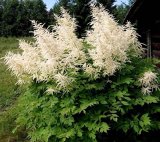
Goats Beard is a big bold and easy to grow perennial for part shade and perpetually wet sites. To 4′ tall and as wide with large fountains of pure white flowers in late spring to early summer. Native in seeps and along watercourses, mimic those conditions in your garden and you’ll have success. Long lived plant that develops a woody base. Completely winter deciduous. Excellent combined with other mesic water loving plants. Tolerates some inundation but not during the growing season. Often found on cliffs away from the browse of deer. Very large permanent perennial in time. Fall color is often yellow. Widespread in the PNW. Oregon native plant.
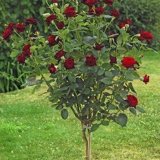
This spectacular blackish-red Hybrid Tea is darker than any of the "black" roses on the market so far. It's even darker than Black Magic, Ink Spots, or Taboo. Originally bred for the florist trade, Black Baccara™ produces a well-formed and long-lasting cut flower, with dramatic black-tinged burgundy-red petals boasting the texture of luxurious velvet. Gardeners who've grown this rose report that it has impressive disease resistance and vigor, and that the blooms increase in size as the plant matures.
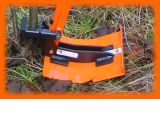
Help us revitalize the creek and clear invasive species.
www.extractigator.com/store/product/extractigator-bigfoot-accessory/
Ivy and blackberry can grow to epic proportions when untouched for a century. Help us reclaim the creek with this amazing tool! We’ve borrowed one to test and love it, now it’s time to acquire one of our own to tackle the alley!
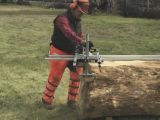
Help us build out the library! Our homestead was built from the trees on the land at the time of construction. What better way to honor the history and our purpose than to reclaim naturally fallen trees for renovations!